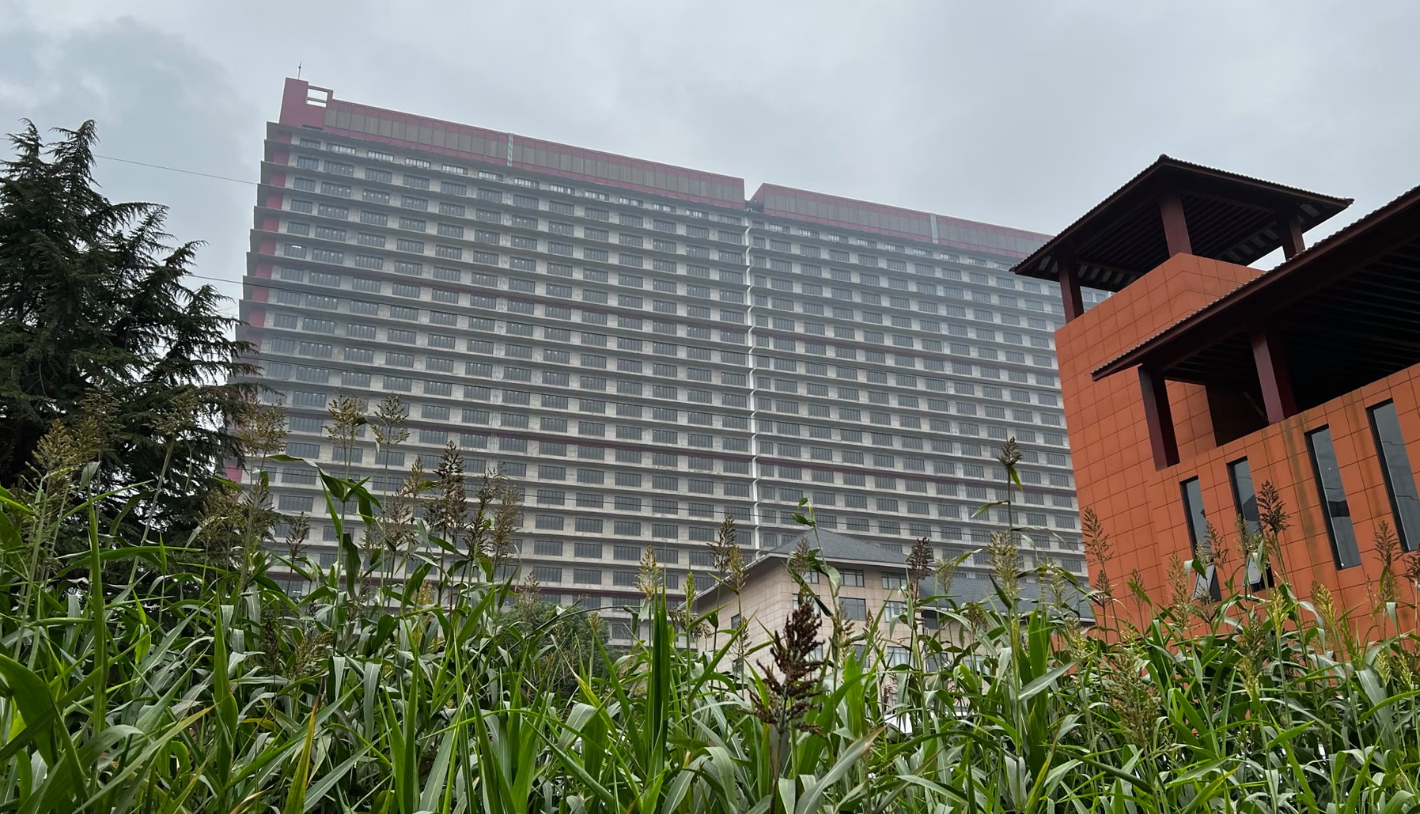
From the outside, it looks like an ordinary apartment building on the outskirts of Ezhou, China. On the inside, 650,000 pigs live out their short lives across 26 floors, never seeing daylight, never setting foot on soil. The facility — the largest single-building pig farm in the world — can slaughter 1.2 million animals per year. It was built by a cement company that pivoted to farming when construction profits dried up. China, which consumes around half of all the world's pork, now has an estimated 170 similar multi-storey farms in Guangdong province alone.
Experts have raised serious concerns beyond the obvious animal welfare questions. Scientists warn that concentrating hundreds of thousands of animals in one enclosed space creates ideal conditions for disease to mutate and spread — potentially to humans. The same logic that was meant to improve biosecurity, they argue, could instead produce the next pandemic. This is not a distant future scenario. It is already built, already running, and already being replicated.
And before we shake our heads from a comfortable distance — the Netherlands kills 1.5 million chickens, 45,000 pigs and 5,000 cows every single day. It holds more livestock per square kilometre than anywhere else in the European Union. Only 3.4% of Dutch animals are raised organically, making it one of the worst performers in the EU on that front. The buildings may look different. The scale may feel less dramatic. But the numbers don't lie — and looking away is just as easy from Amsterdam as it is from anywhere else.